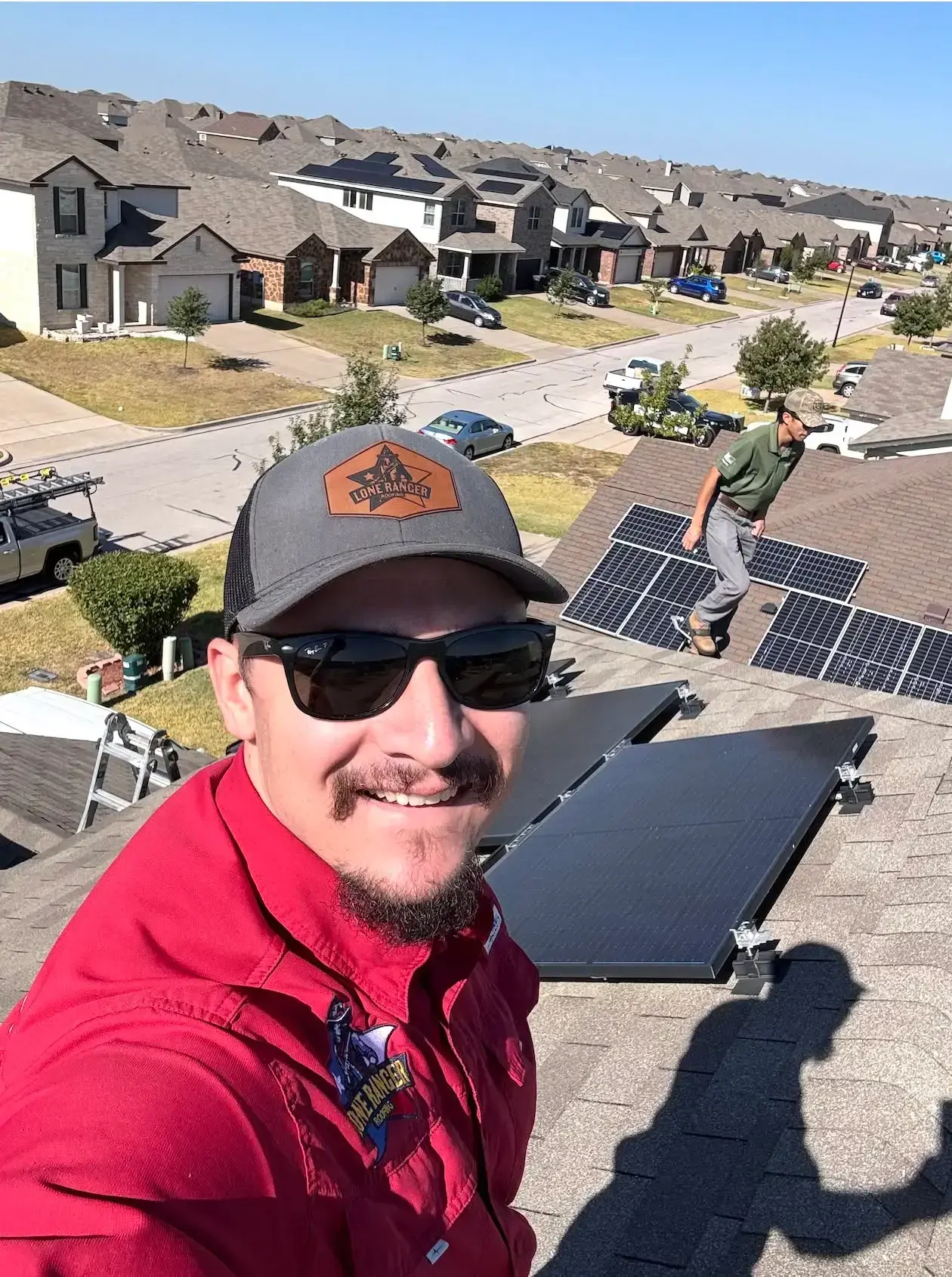
Solar panels are built to last 25 years or longer. Most commercial roofs under them aren’t, and that mismatch is the part that catches Belton business owners off guard a few years into a solar investment. A roof that’s already ten or fifteen years old when panels go up doesn’t get any younger once it’s carrying an array. It gets harder and more expensive to fix, because now there’s a solar system that has to come off, get stored, and go back on around whatever roof work needs to happen underneath it.
We’ve seen this play out enough times to say it plainly: the roof is the foundation of a solar investment, not an afterthought to it. A business in Belton considering solar should be asking about the roof’s remaining lifespan as seriously as they’re asking about panel efficiency and payback period, because a strong solar system on a weak roof is a problem that’s delayed, not solved.
Why Roof Condition Comes Before Solar Installation
A solar array adds weight, foot traffic for installation and maintenance, and long-term commitment to a roof section that installers generally won’t want to touch again for decades. Installing panels on a roof that’s within five to ten years of needing replacement sets up a situation where that replacement now requires a full solar removal and reinstall, adding thousands of dollars in labor that has nothing to do with the roofing material itself.
A roof inspection before any solar planning starts gives a Belton business owner the information needed to sequence the investment correctly. If the roof has 15 or more years of life left, moving forward with solar on the existing roof usually makes sense. If the roof is aging out sooner than the panels’ expected lifespan, replacing the roof first, even if it means delaying the solar project by a few months, saves significantly more money than doing it in the wrong order.
What Makes a Commercial Roof Actually Solar-Ready
Not every roofing material handles a solar mount the same way. Commercial roofing systems like standing seam metal are often the easiest to work with for solar, since panels can clamp directly to the seams without penetrating the roofing material at all. TPO and other membrane roofs can absolutely support solar too, but the mounting approach needs to account for the membrane’s seams and avoid creating new penetration points that become future leak risks.
Structural capacity matters as much as the roofing material on top. A commercial building’s roof deck and framing need to support the added weight of an array, along with the point loads from the mounting system. This is where a straightforward conversation before installation saves a business from finding out mid-project that the roof needs reinforcement nobody planned for.
Planning the Sequence Right
The businesses in Belton that get the best outcome from a solar investment are the ones that treat the roof and the panels as one project instead of two separate decisions made months apart. That means getting a roof assessment early in the solar planning process, not after a solar contractor has already measured for panel layout, and building any needed roof work into the same timeline as the solar installation.
We’ve worked with Belton business owners at both ends of that sequence, some who planned it right from the start and some who called us after their solar installer flagged a roof issue mid-project. The first group spent less money and dealt with far less disruption. That’s the case we make to every business owner weighing solar: get the roof checked first, and let that answer shape the timeline.
Frequently Asked Questions
Should I get my roof inspected before or after choosing a solar company? Before, ideally. Knowing your roof’s remaining lifespan and condition early helps you and your solar installer plan a system that doesn’t need to come off again in a few years.
Can solar panels be installed on any type of commercial roof? Most commercial roofing systems can support solar with the right mounting approach, though standing seam metal roofs tend to be the most straightforward and lowest-risk for penetrations.
What happens if my roof needs replacement after solar panels are already installed? The panels typically need to be removed and reinstalled around the roof work, which adds cost and time that could have been avoided by addressing the roof first.
How much roof life should remain before installing solar? We generally recommend at least 15 years of remaining roof life to avoid needing a roof replacement before the solar system reaches the end of its own lifespan.
Let’s Check Your Roof Before You Go Solar
Belton business owners count on us to give them the full picture before they commit to a solar investment, not partway through it. That’s the standard, every time.
Call us at (254) 300-1413 or reach out here to schedule a commercial roof assessment.
If your roof is in danger, call the Lone Ranger.