
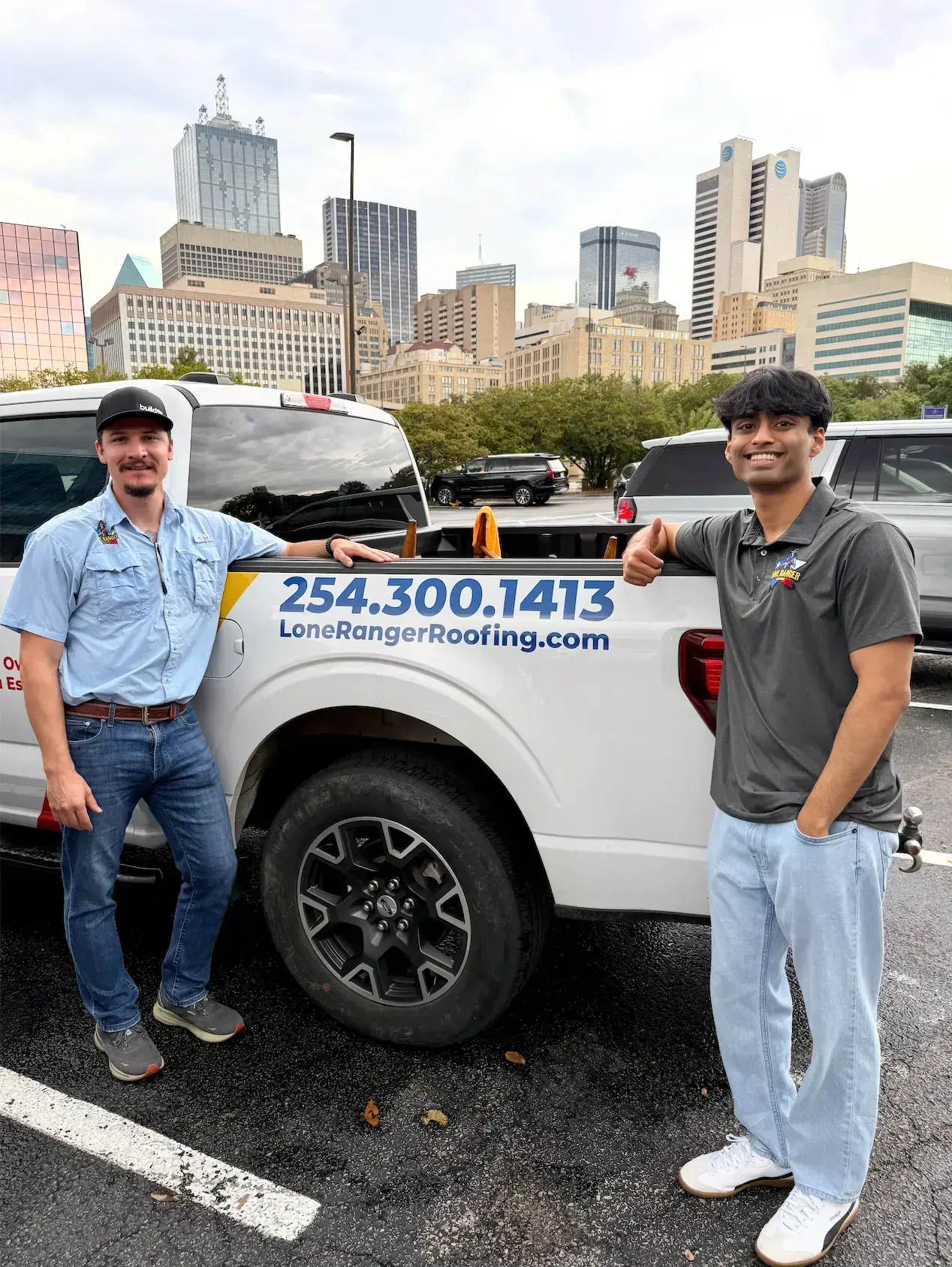
A hailstorm rolls through North Texas, and within a day or two, Dallas neighborhoods fill up with door knockers offering free inspections. Some of them are legitimate. Some are gone by the time the first check clears. For a homeowner standing in the driveway trying to figure out who to trust, the roof isn’t actually the hard part of this process. The insurance claim is.
We’ve walked enough Dallas roofs after enough storms to know that the damage is usually the easy question. Hail leaves a pattern that’s not hard to identify. The harder question is what happens between that first inspection and the check that shows up in the mailbox, because that’s where claims get underpaid, delayed, or denied over paperwork rather than the actual condition of the roof.
How a Dallas Storm Damage Claim Actually Moves
A claim has a rhythm to it, and knowing the steps ahead of time keeps a homeowner from getting steamrolled at any one of them.
It starts with a roof inspection that documents the damage in detail, every affected area photographed and tied to a specific location on the roof, not a general “yes there’s hail damage” summary. That documentation becomes the foundation for everything that follows. A thin report gives the insurance company room to lowball; a thorough one doesn’t.
From there, the homeowner files the claim with their carrier, and an adjuster gets assigned to schedule a visit. This is the part most homeowners handle alone, and it’s the part where having someone who’s done this before actually matters. We meet the adjuster on the roof whenever we can, point to what our inspection already found, and make sure nothing gets missed because the adjuster was in a hurry or working off a quick visual pass from the ground.
The adjuster writes up a scope of work and an estimate. If that estimate matches what the roof actually needs, the claim moves to approval and payment. If it falls short, and in our experience, first estimates in Dallas often do, that’s when a homeowner needs someone in their corner to push back with documentation, not a phone call alone.
What a Thorough Inspection Documents Before You File
The report that goes in ahead of the adjuster’s visit carries more weight than most homeowners realize. It should show granule loss patterns consistent with hail, not wind wear. It should show soft spots on vents, damaged flashing, dented gutters and downspouts as corroborating evidence, since hail that dents metal in the yard usually left a mark on the roof too. And it should show the roof’s condition honestly, including any pre-existing wear that has nothing to do with the storm.
That last part matters more than it seems. An inspection that inflates every flaw into storm damage gets flagged by insurers and can slow the entire claim down. An inspection that draws an honest line between what the storm caused and what was already there tends to move through faster, because it gives the adjuster less to argue with.
What Happens When the Adjuster Comes Out
The adjuster’s visit is short, usually under an hour, and it sets the number everything else gets measured against. We’ve sat across enough kitchen tables with Dallas homeowners and adjusters to know that adjusters aren’t adversaries by default, but they are working through a lot of homes in a short window after a big storm, and details get missed.
Having someone on the roof who already knows every damaged spot changes that conversation. Instead of the adjuster forming their own read of the roof from scratch, they’re confirming or discussing specific findings that are already documented with photos and locations. That tends to produce a fairer number the first time, rather than a lowball estimate that needs to be appealed weeks later.
Common Ways Dallas Storm Damage Claims Get Underpaid
A few patterns show up again and again. Adjusters sometimes approve repair on damage that’s actually widespread enough to justify a full roof replacement, because a ground-level or rushed inspection didn’t catch the full pattern of granule loss. Some claims get partially denied when the report doesn’t clearly separate storm damage from age-related wear, giving the insurer an opening to argue the whole thing is pre-existing condition. And some homeowners accept the first number offered because they don’t realize it’s negotiable with better documentation behind it.
None of these are the homeowner’s fault. They’re the predictable result of going into a claims process solo against an insurance company that handles thousands of these every storm season. The fix isn’t complicated — it’s better documentation, someone present for the adjuster’s visit, and a willingness to push back with evidence when the first number doesn’t match the damage.
Why Who You Call First Matters
After a big Dallas hailstorm, the trucks show up fast. Some of those crews are storm chasers working the aftermath from out of state, and they’ll be gone within weeks of finishing the job, sometimes before a claim even fully closes. If something’s wrong with the work six months later, there’s no one to call.
We live in Central Texas and work the DFW area because the work is here year-round, not because a storm happened to pass through. That means we’re still the ones a Dallas homeowner calls if a supplement is needed on the claim, if the adjuster has follow-up questions, or if something about the storm damage repair needs a second look after the fact. Most replacements we run get finished in a single day, because a torn-off roof shouldn’t be anyone’s overnight problem, and our warranty covers labor the same way it covers materials, since that’s usually where the real issues show up down the line.
FAQ
How long does a Dallas storm damage claim usually take? From filing to final payment, most claims take a few weeks to a couple of months, depending on how quickly the adjuster schedules and how much back-and-forth the documentation requires.
Will my insurance company automatically cover roof storm damage? Coverage depends on your policy, but most standard homeowner policies in Texas cover hail and wind damage. The claim’s success usually comes down to documentation, not whether the coverage exists.
What if the adjuster’s estimate seems too low? Estimates can be appealed with additional documentation, including photos and a detailed scope from a second inspection. This happens more often than homeowners expect, and it’s not a confrontation — it’s part of a normal claims process.
Do I need a roof inspection before filing a claim? Yes. Filing without documentation in hand puts you at the mercy of whatever the adjuster notices on a single visit, which is often less thorough than a dedicated inspection built specifically for the claim.
Dallas homeowners shouldn’t have to navigate an insurance claim and a roof repair with two different sets of information. We handle both from the same set of facts, documented once and used the whole way through.
Call us at (254) 300-1413 or reach out here to schedule a free inspection.
If your roof is in danger, call the Lone Ranger.